Last updated 2026-08-20
TL;DR
Porta potty rental means placing, servicing, and retrieving portable toilets. The Census Bureau files it under NAICS 562991 with septic pumping. You start with an entity, a free IRS EIN, your state's septage or sludge transporter registration, a legal dump contract, and a truck that may need a Class B CDL if GVWR hits 26,001 pounds. OSHA 1926.51 drives many construction counts. Confirm fees with the issuing board.
What is porta potty rental?
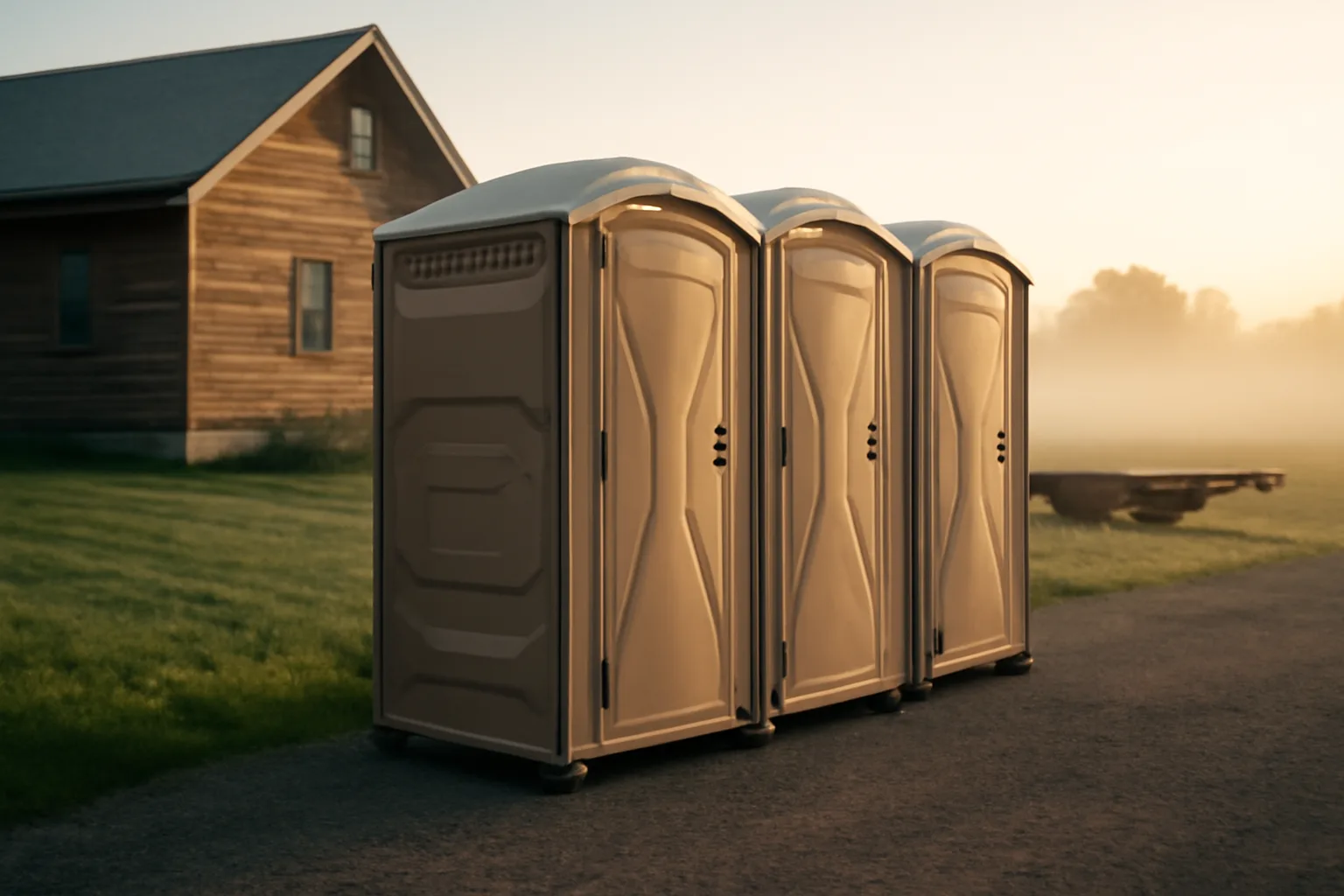
Porta potty rental is a route business. You deliver portable toilets, keep them usable on a service cycle, then haul them off. The U.S. Census Bureau files the work in NAICS 562991, Septic Tank and Related Services. That code covers pumping septic tanks and cesspools and "renting and/or servicing portable toilets." [3]
That sentence is the job. You are not a plumber and you are not the sewer utility. You own or lease plastic units, a way to move them, a vacuum tank to pump them, and a legal place to unload what you pump. Miss the waste side and you do not have porta potty rental. You have inventory and a mess.
Federal rules treat the contents as domestic septage, not as ordinary trash. 40 CFR 503.9 says domestic septage is "either liquid or solid material removed from a septic tank, cesspool, portable toilet, Type III marine sanitation device, or similar treatment works that receives only domestic sewage." [5] Portable toilets sit in that definition on purpose.
Revenue splits in two. Construction accounts run for weeks or months and follow OSHA toilet counts. Event accounts run for a day or a weekend and follow the local health department. Same tanks. Different paperwork. Different anger when you are late.
People hear the word rental and picture storage units. This is wet waste plus diesel plus a phone that rings at 6 a.m. If that mix sounds fine, keep reading. If it does not, read a porta potty rental vs nearby career comparison before you buy a single stall.
How do you start a porta potty rental business?
You start on paper, not in a parking lot. Form an entity your state recognizes, get a free EIN from the IRS, open a bank account in the business name, then call the wastewater or environmental board and ask how they register septage or sludge transporters. Do not buy a trailer full of units until that board tells you what the truck and the tank need. [7][8][9]
That order is boring and it saves money. Units are easy to find. A legal dump ticket is not. SBA's start sequence is the same unglamorous list: structure, registration, tax IDs, then licenses. [9]
After the file exists you still need four operating pieces. Toilets. A delivery method. A vacuum system you are allowed to run. A written place that will take the load. Insurance sits next to those four if you want general contractors to let you on site. I will not invent a premium. Carriers price this like auto plus pollution plus general liability, and the number moves with radius, tank size, and claims. Ask an agent who has actually written vacuum trucks.
Year one looks like routes, not a shop with a counter. You win a site, drop units, service on a set day, invoice, repeat. Miss a July service and the superintendent will replace you. Construction quantity math starts with OSHA 1926.51, which is why the chart below matters before you own a stall. [1]
A franchise is usually a waste if you already understand routes. You are buying a logo and a territory story. Spend that cash on a dump contract and a tank inspection instead.
For another cut of first-year choices, the porta potty rental guide 12 walkthrough sits next to this one.
What licenses and permits does porta potty rental actually need?
There is no single federal porta potty rental license. You stack pieces, and the stack changes at the state line. Confirm every name and fee with the board that prints the card. Nobody honest can quote your current fee from a national article.
Federal pieces are tax and, sometimes, trucking. The IRS EIN is the tax ID, and applying for an EIN is a free service offered by the Internal Revenue Service. [7] FMCSA rules show up if the vehicle is a commercial motor vehicle under their definitions. EPA's Part 503 framework shows up if you land-apply septage instead of paying a treatment plant. Most new operators should pay a plant and stay out of land application. [4][5]
State pieces use messy names. Septage hauler. Sludge transporter. Wastewater transporter. Texas is blunt about it: TCEQ requires sludge transporter registration before you haul. [11] Other states put the same idea in a health department or an environmental quality office. The tank still gets inspected. The decal still has to be on the truck.
Local pieces are the business tax certificate, the yard, and sometimes a health permit for events. Home parking is a zoning question, not a vibe. Ask planning, not a Facebook group.
Cal/OSHA Title 8 section 1526 is not a hauler license. It is why California contractors call you. It sets construction toilet counts in that state, and it runs tighter than the federal table on the per-sex split. [2]
If a seller tells you a federal "porta potty card" covers all of this, walk away. Read a second pass in the porta potty rental guide 18 notes if you want the same stack from another angle.
Do you need a CDL to haul portable toilets?
Maybe. A Class B CDL is required for any single vehicle with a GVWR of 26,001 pounds or more under 49 CFR 383.91. [6] A lot of vacuum trucks sit over that line. A lot of pickup and small tanker setups sit under it. Combination weight can drag you into other CDL classes. Read the door sticker and the trailer plate. Do not trust the sales brochure.
If the truck needs a CDL, the driver needs the medical certificate path FMCSA publishes. That is a real exam with a real card, not a form you invent in the shop. [12]
I would not buy the heaviest truck first. A legal setup you can drive on Monday beats a shiny tanker you cannot insure yet. Some operators start with a lighter pump and a separate delivery trailer. That works if the math on GVWR stays honest.
Crossing a state line can add a hauler credential on top of the CDL. That is a board question, not a forum question. Ask both states before you bid a job on the other side of the river.
How many porta potties does OSHA require on a construction site?
On construction jobs, OSHA 29 CFR 1926.51 sets the table. Twenty or fewer employees: 1 toilet. Twenty or more: 1 toilet seat and 1 urinal per 40 workers. Two hundred or more: 1 toilet seat and 1 urinal per 50 workers. [1]
The same rule tells you what counts when there is no sanitary sewer. OSHA 1926.51(c)(3) says: "Job sites, not provided with a sanitary sewer, shall be provided with one of the following toilet facilities unless prohibited by local codes." The list is privies, chemical toilets, recirculating toilets, and combustion toilets. [1] Chemical toilets are the porta potties in your yard.
California is not the federal table. Cal/OSHA 8 CCR 1526 says a minimum of one separate toilet facility shall be provided for each 20 employees or fraction thereof of each sex. [2] Bid California construction with the federal 1-per-40 number and you will short the site.
General industry is a third table. Factories and similar workplaces use 29 CFR 1910.141, not 1926.51. [13] Do not mix the tables on a bid. Superintendents will still say "meet OSHA." Bring the right section.
OSHA sets presence. It does not set your pump day. Weekly service is common on construction purchase orders because a full tank is a failed unit, but that interval is a contract term, not a federal statute. Write it into the PO.
| Rule | Trigger | Minimum |
|---|---|---|
| Federal OSHA 1926.51 | 20 or fewer workers | 1 toilet |
| Federal OSHA 1926.51 | 20 or more workers | 1 seat and 1 urinal per 40 workers |
| Federal OSHA 1926.51 | 200 or more workers | 1 seat and 1 urinal per 50 workers |
| Cal/OSHA 8 CCR 1526 | California construction | 1 separate toilet per 20 employees of each sex |
What ADA rules apply to portable toilets?
When portable toilets are clustered, the 2010 ADA Standards require accessible units in that cluster. Section 213.2 Exception 4 says that where multiple single user portable toilet or bathing units are clustered at a single location, at least 5 percent of the toilet units and bathing units at each cluster, but no fewer than one, shall comply with 603. [10]
Accessible units are wider and they have grab bars. They cost more and they take a different strap pattern on the truck. If a city event specifier writes ADA into the bid, you cannot swap a standard stall and hope the inspector is tired.
Construction sites are messier. Some GCs only want the OSHA count. Public agencies and university jobs often want the accessible unit anyway. Ask in writing. Do not guess from the last site.
Identify the accessible unit the way the standard says, with the International Symbol of Accessibility. A strip of blue tape is not a symbol. Buy the decal.
I would own at least one accessible unit before I chased public events. Construction-only fleets can wait, then they lose the first festival that pays real money. The porta potty rental guide 24 piece leans harder on spec mix if you are still deciding what to buy.
Where can you legally dump porta potty waste?
You unload at a treatment works or other facility that accepts septage, or you land-apply only if you are actually inside the Part 503 program. Most first-year operators should get a written acceptance letter from a plant before the first pump. EPA's Part 503 rule is the federal biosolids and septage framework, and the Plain English Guide is the readable version of that rule. [4][5]
Portable toilet waste is domestic septage under 40 CFR 503.9 when the unit received only domestic sewage. [5] That is why a landfill dumpster is the wrong door. Plants set receiving hours, grit rules, and fees. Those fees are local. I will not invent them.
Some rural plants refuse portable toilet loads because of deodorants or trash. Call before you bid a county you have never pumped. A Saturday wedding with no Sunday receiving window is how new operators panic-dump. Do not do that. It is a criminal path and this guide stops there.
Keep pump logs even if your state is lazy about manifests. The plant ticket plus your route sheet is the story you want if someone asks where Saturday's load went.
Texas transporters should read TCEQ's sludge transporter materials before the first interstate idea. [11] Reciprocity is not automatic. Confirm with both boards.
What business paperwork do you file in year one?
Entity documents. EIN. State hauler or sludge registration. Vehicle titles. CDL and medical card if the truck needs them. Insurance certificates in the additional-insured language general contractors actually use. Written dump acceptance. Service contracts. Pump logs. Mileage. Invoices that match the route sheet.
IRS Publication 583 is the tax open. Sole props land on Schedule C. Hire someone and you need payroll withholding, not a handshake. [8] The EIN application itself stays free on the IRS site. Paid EIN websites are a waste of money. [7]
SBA's 10-step guide is not industry-specific, and that is fine. Use it as a sequence check, then replace their generic license line with your state's septage form. [9]
I keep a paper checklist for this. RestroomRoute publishes a $199 one-time Portable Restroom Launch Kit aimed at that first-year file, not at running your routes.
Do not promise a customer a start date until the board that registers haulers has issued whatever they issue. Processing times move. Anyone who guarantees a date in a blog post is guessing.
For a second pass on the same file, use the porta potty rental guide 36 checklist and cross out anything that does not match your state board.
How much does it cost to start porta potty rental?
Nobody publishes an official national start cost for porta potty rental. A single number is a sales tool. Your real stack is units, a vacuum asset, a yard, insurance, dump fees, fuel, and enough cash to survive a slow month.
Used units trade in a private market that moves with season and region. New units come from a short list of manufacturers. I will not post a fake sticker. Call two makers and one used broker on the same morning. Write the three numbers down. That is your range for this week, not a law.
The waste truck will dwarf the toilets. Confirm GVWR, tank baffling, valve condition, and whether your state inspects the tank before first use. A cheap tank that fails inspection is not cheap.
Skip the solar luxury trailer until a customer has prepaid it. That is a different business with different insurance and a different customer who will call you about wood trim.
Working capital matters more than a pretty yard. Dump fees and diesel do not wait for your invoices. If the only way the math works is a five-year rosy occupancy guess, you do not have math. You have a wish.
What equipment do you actually need on day one?
Minimum kit: a small set of standard units, a way to strap and haul them, a vacuum tank you are licensed to operate, freshwater, charge, toilet paper, padlocks, and basic PPE. Add at least one accessible unit if you want public events. [10]
You do not need a yard full of sinks on week one. You do not need a vacuum truck the size of a county tanker. You need a legal pump and a legal dump. Some people subcontract pumping at the start. That works until the sub is late on a Friday. Then you learn why owners buy their own tank.
Delivery can be a flatbed, a trailer, or a specialized restroom truck. What matters is securement and weight. Overloaded springs are how you meet a trooper.
Consumables are the quiet cost. Charge, paper, seats, and parts will outrun your spreadsheet if you ignore them. Track them by unit, not by "the shop shelf felt low."
Buy used only if you can inspect walls, doors, and tanks in daylight. Cracked skids and leaking tanks are how cheap fleets stay cheap. The porta potty rental guide 48 notes spend more time on fleet mix if you are still building a buy list.
How do event jobs differ from construction contracts?
Construction is a weekly rhythm. Purchase orders, hold-harmless language, gate times, and OSHA counts. [1] You can plan diesel around a Tuesday route. Events are a spike. Night delivery, a short window, ADA clusters, and a health inspector who may count heads against stalls.
OSHA 1926.51 is a construction standard. It is not your festival formula. [1] Event ratios live in local health rules and in whatever the venue printed in the permit. Alcohol and food change those local numbers. I will not invent a national event ratio because there is not one statute that sets it.
Construction pays slower and steadier. Events pay faster and they cancel when it rains. If your whole book is Saturday weddings, a wet spring will hurt.
Access is the hidden cost. A muddy field at 11 p.m. is not the same pull as a graded pad beside a connex. Price the pull, more than the stall count.
Certified payroll can show up if your techs work on certain public jobs. That is labor law on your people, not a toilet rule. Ask the GC before you smile and sign.
What should you confirm with your state board before you buy units?
Confirm the registration name they use. Septage, sludge, and wastewater are not interchangeable words in a clerk's search box. Confirm whether portable toilet waste is listed as domestic septage. Confirm tank inspection, decals, and whether the driver needs a hauler card on top of any CDL. Confirm whether you can cross a state line on one registration. Confirm the current fee with that board. Do not use a number you found in an old post. [5][11]
Ask how they want records kept. Some boards want pump logs. Some want annual reports. Some wake up only when there is a complaint. Keep the logs anyway.
Ask the treatment plant the same week. Hours, fees, banned additives, and whether they take weekend loads. A license with no receiving window is a paperweight.
No article can honestly guarantee approval or timing. RestroomRoute is an independent publisher, not a law firm and not a service company. If you want the paper checklist in one bundle, the kit is at /start. The board still has the last word.
When you are ready for another state's cut of the same problem, keep going through the porta potty rental guide 60 notes and treat every fee as unverified until the clerk says it.
Frequently asked questions
What is porta potty rental?
Porta potty rental is placing, servicing, and retrieving portable toilets for construction and events. The Census Bureau classifies it under NAICS 562991 with septic pumping. You make money on delivery, the service cycle, and pickup, not on owning plastic. The waste is domestic septage under 40 CFR 503.9, so a legal dump site is part of the business, not an afterthought.
How do you start porta potty rental?
Form an entity, get a free IRS EIN, then register with the state board that handles septage or sludge transporters. Arrange a written dump acceptance before you buy a fleet. Match truck GVWR to CDL rules. Add insurance a GC will accept. Buy units last. Confirm every fee and form with the issuing board. No national card replaces that stack.
Is there a federal porta potty rental license?
No. There is no single federal porta potty card. You combine an IRS EIN, any FMCSA credential the truck needs, and a state septage or sludge transporter registration. EPA Part 503 matters if you land-apply. Most new operators pay a treatment plant instead. Local business tax and yard zoning still apply. Confirm names with the state board.
Do I need a CDL for a porta potty truck?
You need a Class B CDL if the single vehicle GVWR is 26,001 pounds or more under 49 CFR 383.91. Many vacuum trucks clear that line. Smaller pump setups may not. Combinations can trip other classes. Read the door sticker. If a CDL applies, the FMCSA medical certificate path applies too. Confirm with your state driver license office.
How many units does OSHA want on a construction site?
OSHA 29 CFR 1926.51 requires 1 toilet for 20 or fewer employees, then 1 toilet seat and 1 urinal per 40 workers at 20 or more, and 1 seat and 1 urinal per 50 workers at 200 or more. California uses 1 separate toilet per 20 employees of each sex. Bring the table to the bid walk.
Can I dump porta potty waste at a landfill?
Not as ordinary trash. Portable toilet contents are domestic septage when the unit received only domestic sewage, per 40 CFR 503.9. Unload at a plant or other facility that accepts septage, or land-apply only if you are actually in the Part 503 program. Get the plant's acceptance in writing before the first route.
How many ADA porta potties do I need?
Where multiple single-user portable toilets are clustered, the 2010 ADA Standards require at least 5 percent of the units in that cluster, and no fewer than one, to comply with section 603. Mark those units with the International Symbol of Accessibility. Public events often write this into the bid. Construction-only jobs vary. Ask in writing.
What NAICS code is porta potty rental?
Use NAICS 562991, Septic Tank and Related Services. The Census Bureau says that U.S. industry includes establishments primarily engaged in pumping septic tanks and cesspools and/or renting and servicing portable toilets. Banks, insurers, and some permit clerks will ask. It is the official box for this work.
Does OSHA set event porta potty counts?
No. OSHA 1926.51 is a construction jobsites rule. Weekend festivals and private parties follow local health departments and venue permits. Those local numbers move with attendance, hours, and alcohol. There is not one federal event ratio you can paste into every bid. Read the permit that applies to that site.
Can I start with a trailer and no vacuum truck?
You can deliver on a trailer. You still need a legal way to pump and a legal place to unload. Some owners subcontract pumping at first. That holds until the sub misses a Friday. If you go that route, put response times in the subcontract. A yard of full units with no pump is not a business.
Do I need a commercial yard or can I park at home?
Zoning decides, not a national rule. A row of units and a vacuum tank can violate residential codes even if the truck fits in the driveway. Ask the planning department before the first delivery. Neighbors complain about odor and headlights. A cheap industrial pad with a hose bib often costs less than a fight.
Is a porta potty franchise required?
No. Nothing in OSHA, EPA Part 503, or the IRS start guides requires a franchise. You need licenses, a dump site, and equipment you can legally run. A franchise sells a brand and a playbook. If you already understand routes, that fee is usually a poor use of cash compared with tanks, insurance, and working capital.
How often should construction units be serviced?
OSHA requires toilets to be present and usable. It does not set a federal pump calendar. Weekly service is the usual construction purchase-order term because a full tank is a closed toilet. Heavy crews, heat, and all-day overtime need a shorter cycle. Write the interval into the contract so you are not arguing beside a pad.
What records should I keep for the first audit?
Keep the EIN letter, entity papers, hauler registration, tank inspection, insurance certificates, dump tickets, route sheets, invoices, and mileage. IRS Publication 583 is the tax baseline. State boards differ on manifests. Keep pump logs even if nobody asked this year. The story you want is simple: this load left this site and arrived at this plant.
Sources
- OSHA 29 CFR 1926.51 Sanitation: Construction jobsites must provide toilets on OSHA Table D-1 (1 toilet at 20 or fewer employees; 1 seat and 1 urinal per 40 workers at 20 or more; 1 seat and 1 urinal per 50 workers at 200 or more), and sites without a sanitary sewer may use chemical toilets unless local codes prohibit them.
- Cal/OSHA Title 8 section 1526 Toilets at Construction Jobsites: California construction requires a minimum of one separate toilet facility for each 20 employees or fraction thereof of each sex.
- U.S. Census Bureau NAICS 562991 Septic Tank and Related Services: NAICS 562991 comprises establishments primarily engaged in pumping septic tanks and cesspools and/or renting and/or servicing portable toilets.
- EPA Plain English Guide to the EPA Part 503 Biosolids Rule: EPA Part 503 is the federal framework for biosolids and domestic septage, including land application and related residual handling.
- eCFR 40 CFR 503.9 General definitions: Domestic septage is defined to include liquid or solid material removed from a portable toilet that receives only domestic sewage.
- eCFR 49 CFR 383.91 Commercial motor vehicle groups: A Class B CDL applies to any single vehicle with a GVWR of 26,001 pounds or more.
- IRS Apply for an Employer Identification Number (EIN) Online: Applying for an EIN is a free service offered by the Internal Revenue Service.
- IRS Publication 583 Starting a Business and Keeping Records: Publication 583 is the IRS guide to starting a business, choosing a tax setup, and keeping records such as those used on Schedule C.
- U.S. Small Business Administration 10 steps to start your business: SBA's start sequence covers business structure, registration, tax IDs, and licenses before operations.
- U.S. Access Board 2010 ADA Standards section 213.2: Where multiple single user portable toilet units are clustered at a single location, at least 5 percent of the toilet units at each cluster, but no fewer than one, shall comply with 603.
- FMCSA DOT Medical Exam and Commercial Motor Vehicle Certification: CDL drivers must follow FMCSA's DOT medical examination and certification process.
- OSHA 29 CFR 1910.141 Sanitation: General industry toilet facility counts are set in 29 CFR 1910.141, a different table from the construction standard.