Last updated 2026-08-20
TL;DR
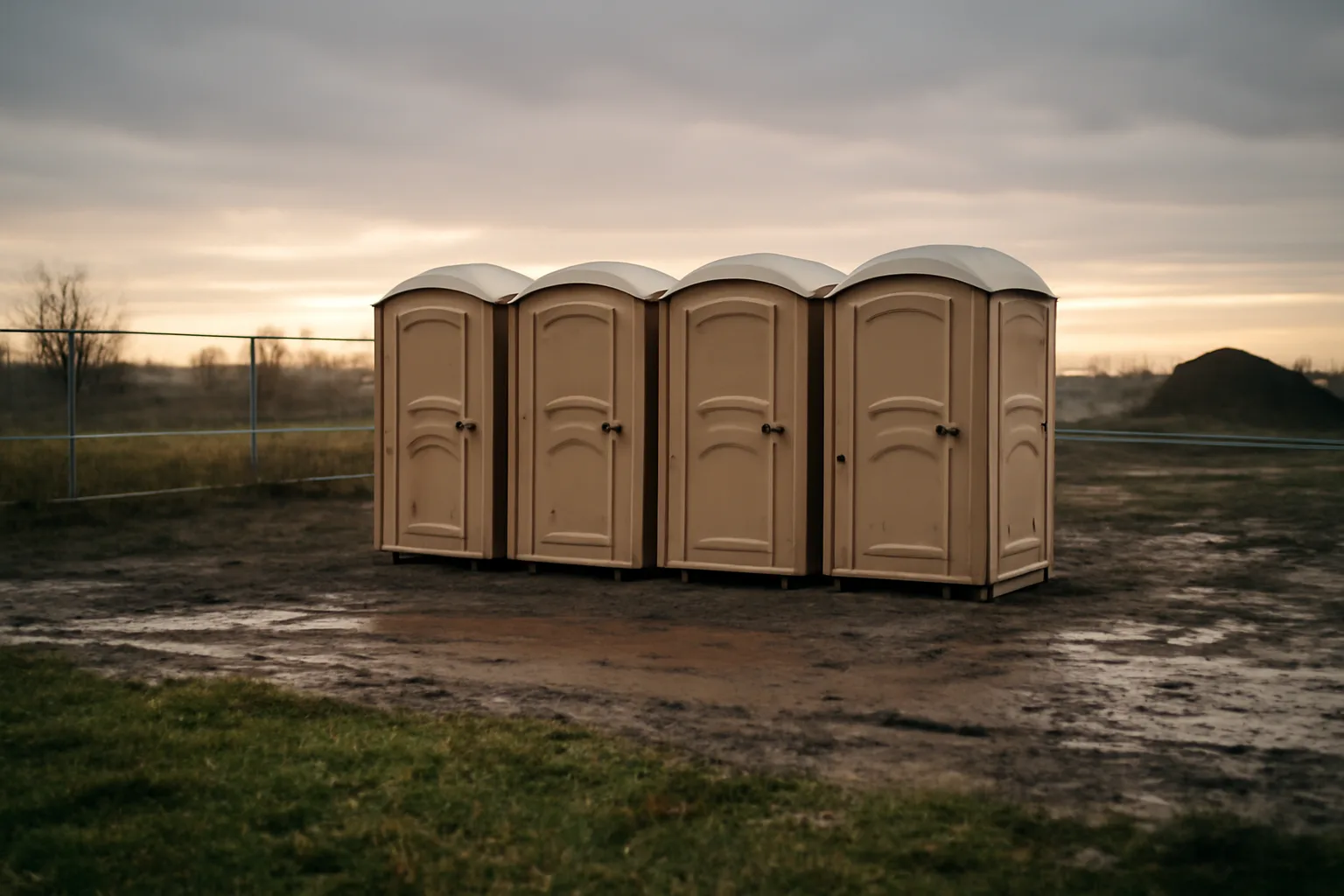
Porta potty rental means placing and servicing portable toilets and hauling the waste, filed under NAICS 562991 with septic pumping. You start with an entity, a free EIN, a written dump agreement, and the state septage or waste-transporter permit your board issues. OSHA construction rules call for 1 toilet seat and 1 urinal per 40 workers at sites with 20 or more employees. Confirm every fee with that board.
What is porta potty rental?
Porta potty rental is a route business. You deliver portable toilets and often handwash stations, keep them usable on a set service cycle, then haul the waste to a plant or other legal disposal point that will take it in writing.
The U.S. Census Bureau files this work under NAICS 562991. That code "comprises establishments primarily engaged in (1) pumping (i.e., cleaning) septic tanks and cesspools and/or (2) renting and/or servicing portable toilets." [3] Same industry bucket as septic pumping. That is why your state environmental board treats you like a liquid-waste hauler, not like a party-rental closet.
Customers are messy. Construction supers want weekly service and a unit that does not blow over. Event planners want a Saturday drop, a Sunday pull, and a clean invoice. Farms, disaster sites, and parks show up too. The asset is plastic. The product is a legal, non-smelly stall when someone needs it.
You do not need a national myth to understand it. You need a truck that can pull vacuum, a dump ticket, and a contract that says who pays if the unit gets burned. Porta potty rental is unglamorous on purpose. That is the job.
How many porta potties does OSHA require per 40 workers?
OSHA's construction rule is 1 toilet seat and 1 urinal per 40 workers once a job site has 20 or more employees. Sites with 20 or fewer people need 1 toilet. That ratio lives in Table D-1 of 29 CFR 1926.51. [1]
Read the table as a floor, not a sales pitch. An 80-person crew is 2 seats and 2 urinals on the federal math. Heat, mixed crews, and a long walk from the workface still push smart supers to order more. The table is the least you can put on a site without a violation, not the number that keeps a crew happy in August.
California is tighter. Cal/OSHA Title 8 section 1526 says "A minimum of one separate toilet facility shall be provided for each 20 employees or fraction thereof of each sex." [2] Bid California work and the federal 40 will burn you. Quote 20, and split sexes when the site makes you.
| Rule set | Toilet floor | Where it lives |
|---|---|---|
| Federal construction | 1 seat and 1 urinal per 40 workers (20 or more people) | 29 CFR 1926.51 Table D-1 |
| California construction | 1 toilet per 20 employees of each sex | Title 8 CCR 1526 |
| Federal general industry | Separate table by employee count | 29 CFR 1910.141 |
General industry (factories, warehouses) uses 29 CFR 1910.141, a different table that usually asks for more seats at higher headcounts. [15] Construction is the porta potty bread and butter. Use 1926.51 unless the customer is not a construction employer.
I would print Table D-1 on the back of every construction quote. It stops the "we have 12 guys, we will share one dirty unit" argument. It also keeps you from overselling 8 units to a 15-person remodel.
How do you start porta potty rental?
You start on paper. Form the entity your state allows, get a free EIN from the IRS, open a bank account that is not your personal checking, then apply for the septage or waste-transporter credential your environmental agency actually issues. [6][7][8] Lock a written dump agreement before you buy a tank.
The IRS will issue an EIN online at no charge when your principal place of business is in the United States. [6] Publication 583 walks through records, taxes, and the basic start package. [7] SBA's structure guide is enough to choose a sole prop, partnership, LLC, or corporation without paying a guru. [8] I would use an LLC in most states unless your lawyer has a real tax reason not to. Confirm formation fees with your secretary of state. Those numbers move.
Then the unsexy permits. Almost every state wants liquid-waste haulers on a list. Texas runs sludge transporter registration through TCEQ. [13] Florida ties onsite sewage and related work to section 381.0065, Florida Statutes, and county environmental health still wants a say in how septage moves. [12] Your county business license and a disposal letter from a wastewater plant matter more than a logo.
Do not buy 40 units on a credit card in week one. Buy the legal right to dump, then enough units to cover the first two signed contracts plus a spare. If a route never materializes, plastic in a field is a sad asset.
The U.S. Census Bureau files portable toilet rental and septic pumping together under NAICS 562991. [3] Use that code on tax forms and insurance applications so you do not get booked as generic "rental."
What licenses do you need to haul and rent units?
You usually need a business registration, a waste hauler or septage transporter permit, vehicle credentials, and whatever your city calls a local privilege license. There is no single federal porta potty rental license. The federal pieces are sanitation rules for your customers and sludge rules for the waste. [1][4]
State boards invent the rest. Texas sludge transporter registration is a real TCEQ program for people moving sewage sludge and similar liquid wastes. Confirm whether portable toilet loads sit inside the current definition before you roll. [13] Florida operators should read section 381.0065 and then call the county health department that actually stamps haulers. [12] California construction toilet counts sit in Title 8 section 1526, and county environmental health plus a water board or plant agreement handle the dump side. [2]
Renewal is where people get sloppy. If you already operate, read the state renewal notes before you guess a fee. Timing and dollar amounts are board facts, not blog facts. Start with porta potty rental renewal in California, porta potty rental renewal in Florida, and porta potty rental renewal in Arizona if those are your states. Confirm the live fee on the board's form.
I would not pay a consultant to "expedite" a hauler card. Mail a complete packet. Incomplete packets are why people wait.
Where can you legally dump porta potty waste?
You dump where a publicly owned treatment works or a licensed septage facility accepts portable toilet waste in writing. You do not dump in a ditch, a storm drain, a home septic lid, or a random manhole. 40 CFR Part 503 sets the federal floor for sewage sludge and domestic septage use and disposal. [4]
The rule "establishes standards, which consist of general requirements, pollutant limits, management practices, and operational standards, for the final use or disposal of sewage sludge generated during the treatment of domestic sewage in a treatment works." [4] Portable toilet waste is a flavored cousin of domestic septage. Deodorizers and formaldehyde-style products can get you rejected at the plant. Ask the plant what chemistry they ban before you buy a tote of cheap blue.
EPA's Domestic Septage Regulatory Guidance is the plain-language companion to Part 503 if you ever think about land application. [5] Most first-year operators should not land-apply. Pay the plant. Keep every ticket.
A verbal "yeah, we take honey wagons" is not a permit. Get hours, waste codes, pricing, and a contact name. If the plant shuts you out in July, your whole route dies in July.
Do you need a CDL and a USDOT number?
You need a CDL when the truck (or combination) crosses the Class A or Class B thresholds, most often a single vehicle with a GVWR of 26,001 pounds or more. 49 CFR 383.91 is the classification rule. [10] Plenty of purpose-built vacuum trucks sit over that line. A one-ton pickup with a small slip-in tank may not.
FMCSA's CDL page is the federal starting point. States add skills tests, medical cards, and air-brake endorsements. [9] Confirm with your DMV, not a forum screenshot.
A USDOT number is a separate question. FMCSA explains when interstate carriers need one. Intrastate commercial trucks often need a state equivalent even if you never cross a state line. [14] I would get the number the week you title the truck if the GVWR or your state commercial plate rules even sniff at the threshold. Driving dirty is a dumb way to lose a truck.
Tow a few units behind a consumer pickup, under the state trailer limits, and you may stay out of CDL land. The vacuum truck is what usually pulls you in.
What equipment should you buy first?
Buy a legal service truck and a short stack of standard units before you buy anything pretty. A used vacuum truck that actually holds vacuum is the business. Units are inventory. Handwash stations win weekend events. Solar luxury trailers are a vanity buy until you have a signed, recurring contract that pays for them.
I will not quote a fake national price list. Manufacturers and auction yards do not publish one official number. Used standard units often change hands from the mid hundreds into the low thousands apiece, and trucks swing from the mid five figures well into six, depending on tank size, year, and whether the pump is tired. Those are marketplace ranges with wide error bars. Get three invoices.
Skip vinyl wraps in month one. Skip the custom app. Skip buying 80 units because a Facebook group said density is destiny. A spare hose, a spare pump, and a unit you can swap when someone backs a skid steer into a door will save more routes than a new brand.
RestroomRoute publishes paper-path kits for people who want forms in one pile. The $199 one-time Portable Restroom Launch Kit is at /start if you want that stack. It is not a license and it does not talk to your board.
How much does it cost to start porta potty rental?
Nobody publishes a federal start-cost series for porta potty rental. Honest range talk is ugly. Formation and an EIN are cheap (the EIN is free). [6][8] The hauler permit fee is a state number. Confirm it on the application. Insurance binders, a dump account, and the first truck eat most of the cash.
Own a capable truck already and buy a handful of used units, and some people stand up a tiny local route for low five figures. Finance a fresh vacuum truck and a trailer of new plastic, and you can burn six figures before the first invoice pays. I have no government table that settles the midpoint. Anyone who gives you a single average startup cost is inventing a national myth.
Hold cash for 90 days of dump fees, diesel, and repairs. Plants bill. Pumps fail on Fridays.
Do not confuse unit count with profit. Ten units on weekly construction at a price the super will actually pay will beat forty units sitting behind your shop. Price the dump fee into every weekly rate or you will work for the plant.
What insurance do porta potty rental operators carry?
Most operators carry commercial auto on the truck, general liability on the units and the work, and a pollution or waste-hauler endorsement because you are moving septage. Workers' comp shows up the day you hire. None of those policies are optional in the real world if you want a construction gate to let you in.
I will not invent premiums. Underwriters price this by garage location, driving records, tank size, and claims. Your agent should see the actual truck and the dump agreement. A personal auto policy on a lettered vacuum truck is a claim denial waiting to happen.
Ask whether the GL contract covers a tip-over that hurts someone, a hose spill in a parking lot, and damage to a unit a customer lights on fire. Get additional insured language that matches what general contractors print in their vendor packets. Confirm state minimums with the insurance department if you want the legal floor. Buy more than the floor if you plan to sit on active job sites.
How do construction jobs and events differ?
Construction is a weekly route with a purchase order and an OSHA headcount argument. Events are a spike. You drop a cluster, service mid-event if the crowd is large, and pull when the band is done. The OSHA 40-worker construction table does not run a Saturday festival. [1] Event math is crowd size, hours, alcohol, and whether women have equal access to seats.
If the public can use the toilets, plan ADA-compliant units. The 2010 ADA Standards are the design baseline federal agencies point to for accessible toilet rooms and elements. [11] A single skinny construction unit at a county fair is how you get a complaint.
Construction wants service logs. Events want a pretty row and a 6 a.m. pull. Price them differently. Event weekends will wreck a construction-only schedule if you staff like a solo operator.
I would take construction first. It teaches the pump, the plant, and the paper. Add weekends when you have a second driver or a very honest calendar.
What paperwork should you keep in year one?
Keep the entity documents, the EIN letter, the hauler permit, the dump agreement, every disposal ticket, vehicle registrations, insurance certificates, and a service log per unit. IRS Publication 583 is blunt about records. Keep them. [7]
A ticket that shows date, gallons, and plant name is how you survive a spill complaint. A log that shows you serviced the hospital job on Tuesday is how you survive a GC who claims you never came.
Hire someone, and add I-9s, state new-hire reports, and workers' comp. Run a CDL truck, and add medical cards and inspection reports. [9][10]
State renewal calendars differ. Build a folder per state you touch. Porta potty rental renewal in Georgia, porta potty rental renewal in Colorado, and porta potty rental renewal in Alabama are the kind of state pages you read before you guess a due date. Then open the live board form anyway.
Nobody has a national official retention schedule for porta potty tickets. I would keep dump tickets at least as long as your state keeps environmental enforcement windows open, and tax records for the IRS period that applies to you. Ask your accountant for the tax piece. Ask the board for the waste piece.
How do state rules change the paper path?
The federal floor stays put. OSHA still talks in 40-worker chunks on construction. [1] Part 503 still sits on sludge. [4] Everything you file for the right to roll a honey wagon is state and sometimes county.
California toilet counts are 1 per 20 employees of each sex on construction. [2] That changes quotes. Texas wants you inside the TCEQ transporter frame if your waste type matches. [13] Florida's onsite sewage statute is the flag to start with, then the county. [12] Arizona, Georgia, Colorado, and Alabama each run their own hauler or sanitation renewals. Do not copy a neighbor state's checklist.
Operate across a state line and you may stack two transporter permits and a USDOT number. [14] That is annoying. It is cheaper than a roadside shutdown.
Confirm every fee, quota, and processing time with the issuing board. RestroomRoute is an independent publisher, not a law firm and not a service company. We do not quote live board fees here because those numbers change on the form, not on our calendar.
What would you do in the first 90 days?
I would form the LLC, grab the EIN the same morning, and call two wastewater plants before I called a unit dealer. [6][8] The plant that says yes in writing is the real start. Then I would file the hauler application with complete attachments, not half a packet.
Week three I would price insurance with the actual truck VIN. Week four I would buy only the units the first two contracts need, plus one spare. I would print OSHA Table D-1 on construction bids and ask for headcount in writing. [1]
I would skip Facebook turnkey route offers. I would skip luxury trailers. I would keep a paper log in the cab and a photo of every dump ticket.
Want a form pile in one place? The Portable Restroom Launch Kit lives at /start. Use it as a checklist. Then do the board's forms, because only the board can stamp you. Nobody here can promise an approval or a processing clock.
Ninety days is enough to know if supers will take your call. It is not enough to declare victory.
Frequently asked questions
What is porta potty rental?
Porta potty rental is placing, servicing, and later pulling portable toilets, then hauling the waste to a legal plant. The Census Bureau groups it with septic pumping under NAICS 562991. You are in the liquid-waste business, even if the customer thinks they hired a plastic stall.
How do you start porta potty rental?
Form an entity, get a free IRS EIN, open a business bank account, then file the state septage or waste-transporter permit your environmental board issues. Lock a written dump agreement before you buy tanks. Confirm fees and forms with that board. Do not start by financing a yard full of unused units.
Does OSHA really use a 40-worker toilet ratio?
Yes, on construction. 29 CFR 1926.51 Table D-1 requires 1 toilet seat and 1 urinal per 40 workers once a site has 20 or more employees. Sites with 20 or fewer people need 1 toilet. California construction uses 1 toilet per 20 employees of each sex under Title 8 section 1526.
Do I need a license to rent porta potties?
There is no single federal rental license. You typically need state business formation, a local business license, and a septage or sludge-transporter credential to haul the waste. Texas uses TCEQ sludge transporter registration. Florida starts with onsite sewage law and the county health department. Confirm the live application with your board.
Can I dump porta potty waste in a regular sewer cleanout?
Not unless the system owner and the treatment plant have accepted that load in writing. Random manholes, ditches, and home septic lids are illegal dumping. 40 CFR Part 503 is the federal sludge and domestic septage floor. Keep plant tickets with date, gallons, and facility name.
Do I need a CDL for a vacuum truck?
Often yes. 49 CFR 383.91 puts most single vehicles with a GVWR of 26,001 pounds or more in Class B. Many purpose-built vacuum trucks clear that line. A small slip-in tank on a one-ton pickup may not. Confirm GVWR on the door sticker and ask your DMV, not a forum.
How many units should I start with?
Enough for the first two signed contracts plus one spare. There is no official national starter fleet. Buying 40 units before you have dump rights and a route is how plastic ends up in a field. Construction weekly stops teach the pump faster than a yard of idle inventory.
Are ADA units required at public events?
If the public can use the toilets, plan accessible units. The 2010 ADA Standards are the federal design baseline agencies point to for toilet rooms and elements. A single skinny construction unit at a fair is how complaints start. Construction-only sites follow OSHA first, then any contract ADA clause.
How often should units be pumped?
Weekly is the common construction contract. Heat, headcount, and events blow that up. There is no national statute that sets one service interval for every porta potty. Write the cycle into the quote and charge extra when a site wants midweek service or a weekend festival pull.
What NAICS code is porta potty rental?
NAICS 562991, Septic Tank and Related Services. The Census Bureau text covers pumping septic tanks and cesspools and renting or servicing portable toilets. Use that code on tax filings and insurance so you are not miscoded as generic equipment rental.
Is an LLC required to start?
No. The SBA structure guide lists sole props, partnerships, LLCs, and corporations. An EIN is free from the IRS either way. I would still form an LLC in most states for the liability box, then confirm formation fees with the secretary of state. A lawyer beats a social media template if you have partners.
How do I confirm my state hauler fee?
Open the current application on the environmental board or health department site and read the fee line. Do not trust a blog number, including older pages on this site, for a live dollar amount. Renewal timing is a board fact. If you already hold a card, use that state's renewal article and then the live form.
What is a waste of money in year one?
Luxury restroom trailers with no signed contract, full-fleet wraps, custom apps, and 80 units bought because a group said density wins. Spend first on dump rights, a truck that holds vacuum, insurance the GC will accept, and a spare unit. Pretty comes after invoices clear.
Do construction sites and weddings use the same contract?
No. Construction wants a purchase order, weekly service logs, and an OSHA headcount. Weddings and festivals want a timed drop, often mid-event service, ADA units if the public is invited, and a hard pull time. Price the spike and the weekend labor separately or you will subsidize parties with job-site rates.
Sources
- OSHA 29 CFR 1926.51 Sanitation: Table D-1 requires 1 toilet seat and 1 urinal per 40 workers at construction sites with 20 or more employees, and 1 toilet at 20 or fewer.
- Cal/OSHA Title 8 section 1526 Toilets at Construction Jobsites: California construction requires a minimum of one separate toilet facility for each 20 employees or fraction thereof of each sex.
- U.S. Census Bureau NAICS 562991 Septic Tank and Related Services: NAICS 562991 covers pumping septic tanks and cesspools and renting and/or servicing portable toilets.
- eCFR 40 CFR 503.1 Purpose and applicability: Part 503 sets federal standards for final use or disposal of sewage sludge from treatment of domestic sewage, the floor under septage disposal.
- EPA Domestic Septage Regulatory Guidance: A Guide to the EPA 503 Rule: EPA publishes plain-language guidance on how the Part 503 rule applies to domestic septage management.
- IRS Apply for an Employer Identification Number (EIN) Online: Businesses with a U.S. principal place of business can apply for an EIN online at no charge.
- IRS Publication 583 Starting a Business and Keeping Records: Publication 583 is the IRS start package for entity tax basics and recordkeeping.
- U.S. Small Business Administration Choose a business structure: SBA outlines sole proprietorship, partnership, LLC, and corporation as the basic legal structures for a new firm.
- FMCSA Commercial Driver's License: FMCSA is the federal starting point for CDL classes, medical certification, and state-issued commercial licenses.
- eCFR 49 CFR 383.91 Commercial motor vehicle groups: Class B includes any single vehicle with a GVWR of 26,001 pounds or more, the usual CDL tripwire for vacuum trucks.
- U.S. Department of Justice 2010 ADA Standards for Accessible Design: The 2010 ADA Standards are the federal design baseline for accessible toilet rooms and related elements.
- Florida Statutes section 381.0065 Onsite sewage treatment and disposal systems: Florida statute 381.0065 is the onsite sewage law county environmental health uses when septage and related systems are regulated.
- Texas Commission on Environmental Quality Sludge Transporter Registration: TCEQ runs a sludge transporter registration program for people moving sewage sludge and similar liquid wastes in Texas.
- FMCSA Do I need a USDOT number?: FMCSA explains when a carrier must obtain a USDOT number for interstate commercial operations.
- OSHA 29 CFR 1910.141 Sanitation: General industry sanitation, including a separate toilet-count table, lives in 29 CFR 1910.141 rather than the construction standard.